
The Turmeric, the Swing, and the Bath: Inside a Telugu Nalugu Pellikuthuru Ceremony in Novi, Michigan.
Siri’s home, north of Detroit, was ringed by the most plump, luscious, exploding peonies one could hope to see in the north east in midsummer. Her Mom was both the pruner and curator of these flowers, which really set the mood and tone of this Nalugu Pellikuthuru Ceremony, which took place a few days before Siri & Swaroop’s Telugu Indian wedding & reception. We’re going to dig in a little deeper behind the Nalugu Pellikuthuru ceremony meaning and its rituals.


So, what is a Nalugu Pellikuthuru Ceremony? For brides familiar with north Indian traditions, this ceremony is very much like a Haldi or a Pithi.
Long before the mangalsutra is tied or the seven steps are taken around the fire, there is a quieter, golden morning — one that belongs entirely to the bride and the women who raised her. In Telugu weddings, this is Nalugu Pellikuthuru: the ceremony most guests will casually call “Haldi,” but which is, in truth, a sequence of three distinct rituals layered into one radiant, turmeric-scented morning.
If you’re a Telugu bride planning your wedding, understanding what Nalugu involves will help you brief your photographer, your family, and your day-of coordinator on what matters most to capture. Here’s what’s really happening, and how the event usually unfolds.
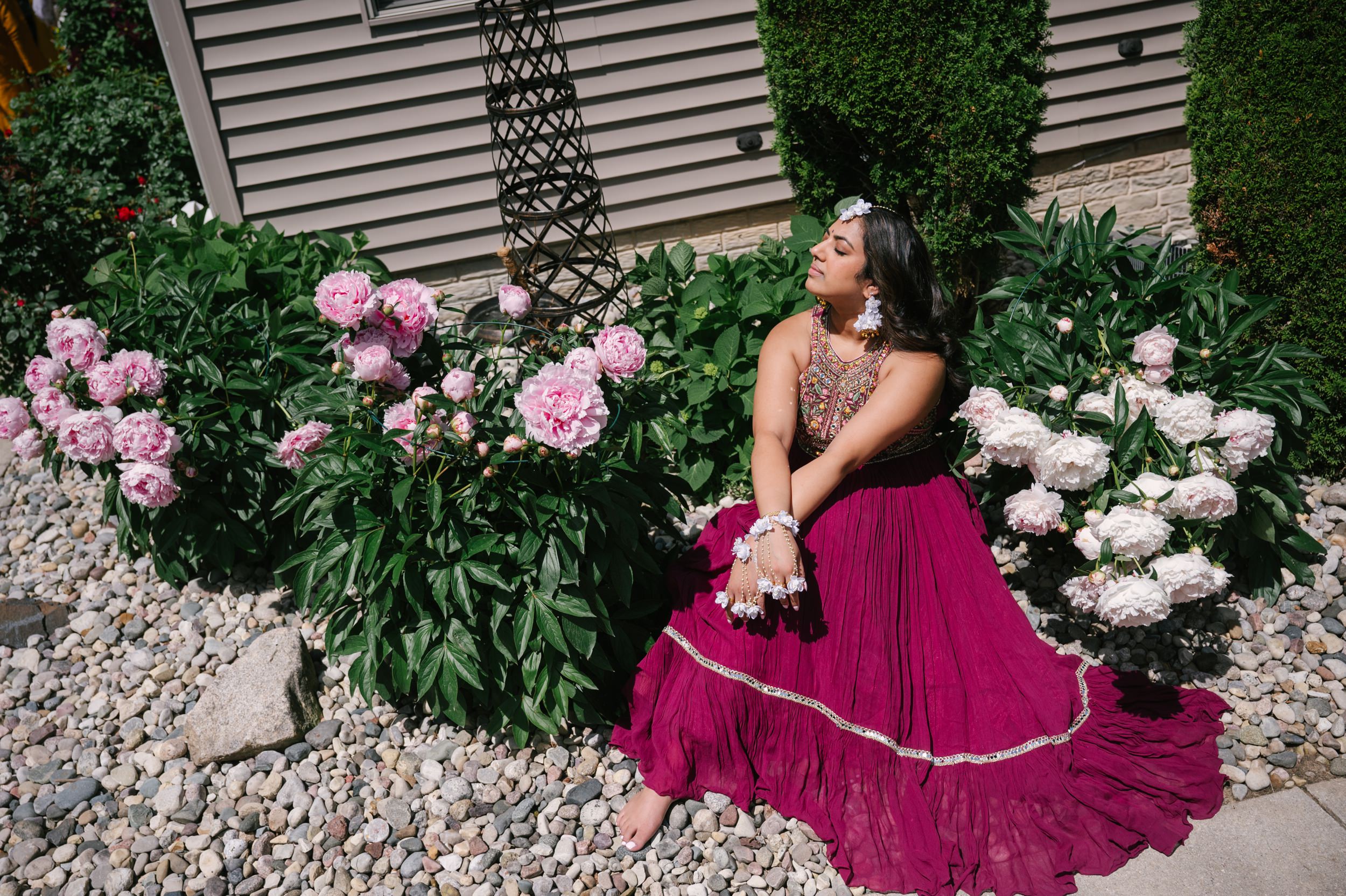
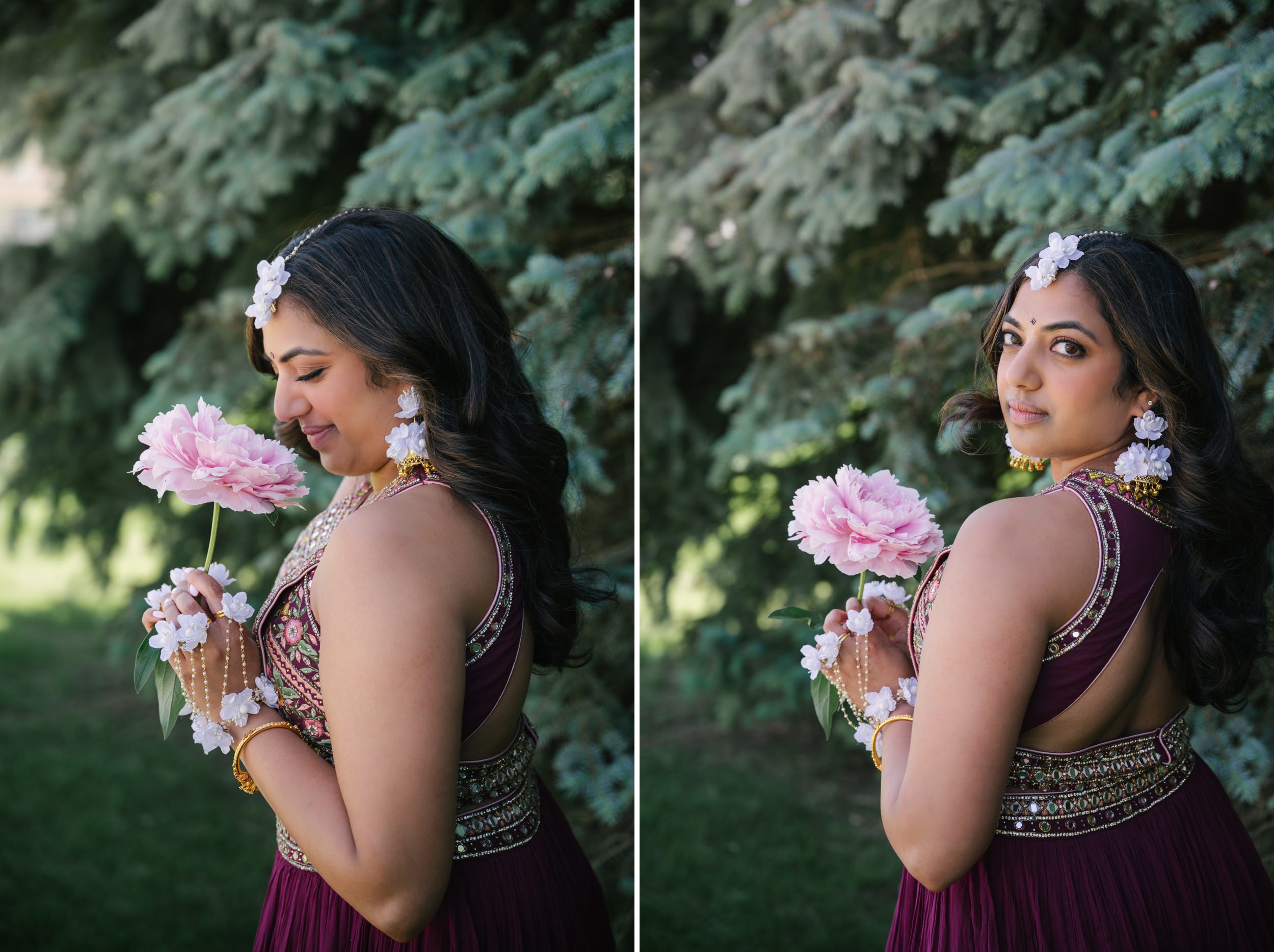
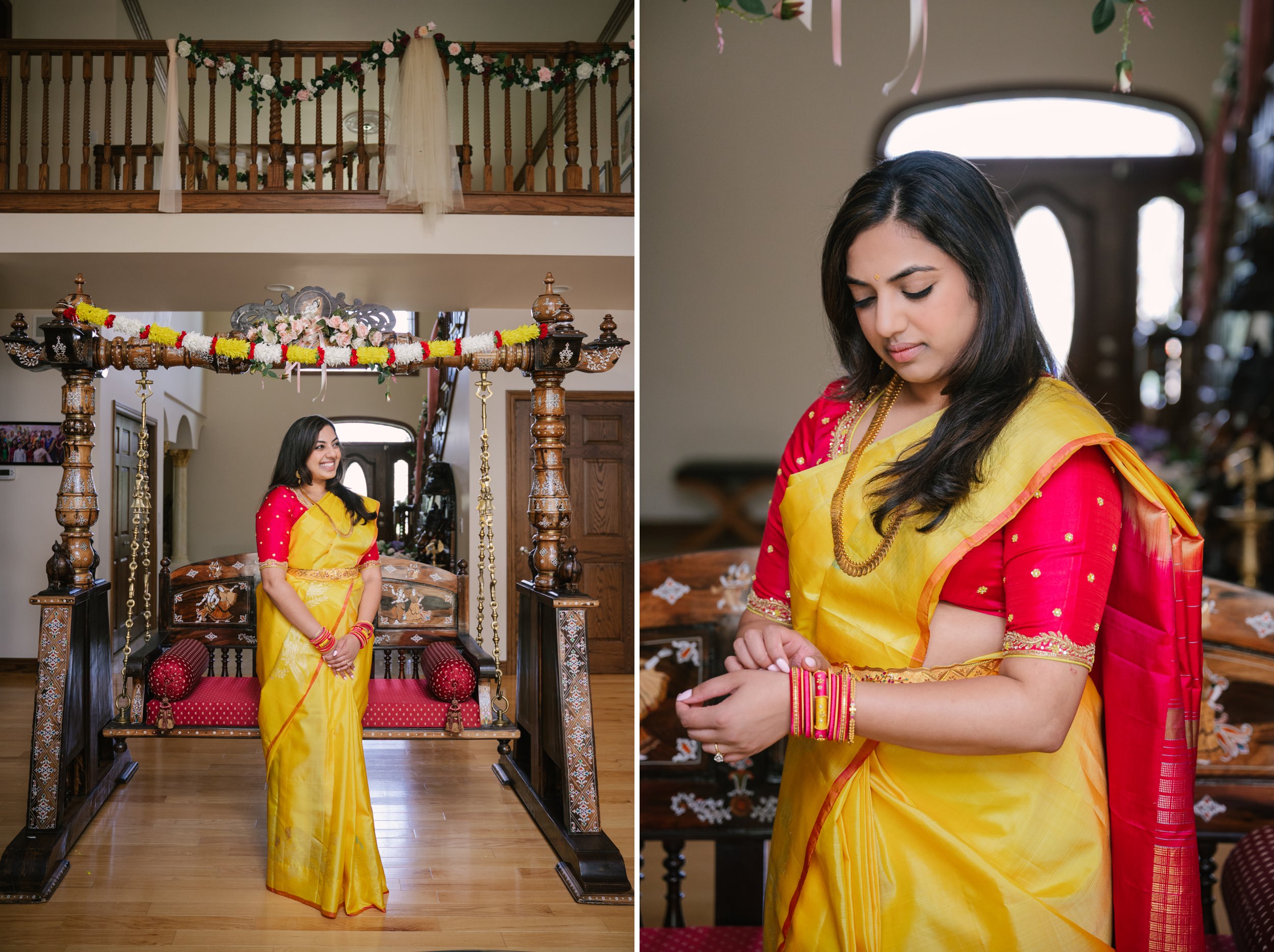
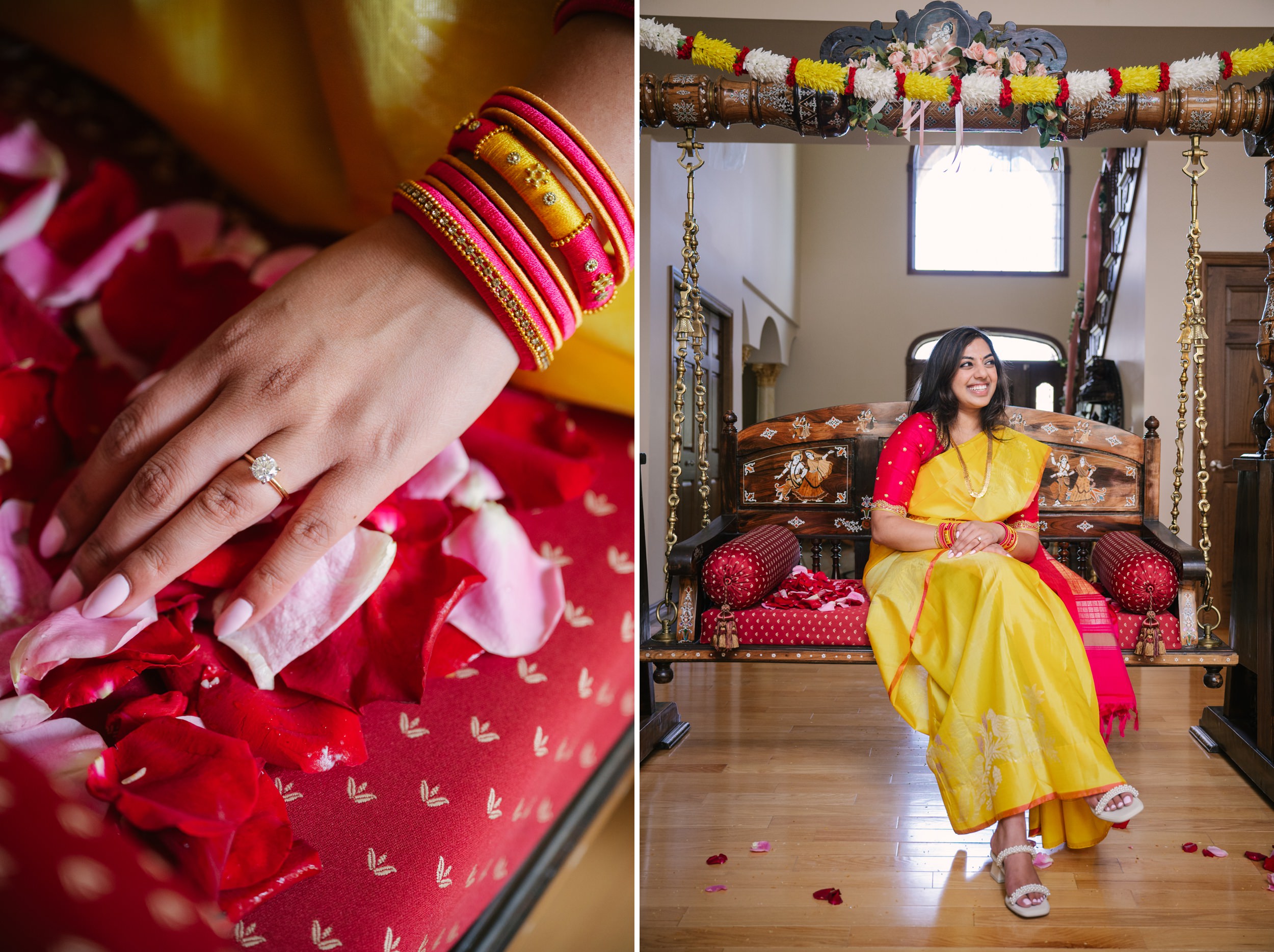
Siri’s portraits in the sun & shade.
Before any event, we speak with our brides and grooms to see if we create some time for their portraits, before the guests arrive. It doesn’t have to be long, even 15-20 minutes for solo portraits is great (longer if it’s the couple). This time allows us to take the bride away from the logistical chaos (usually) unfolding where the event is taking place, and take a breather with us alone. This helps her collect her thoughts, and start feeling truly present in the quiet moments as we direct her and chit-chat with her.
It’s usually the best time for portraits because hair & make-up are fresh, and the sole focus on the bride allows us to get beautiful photos.
For Siri, we simply took these around her property, utilizing the sun and shade, and the bursting peony bush.


Nalugu: The Turmeric Anointing
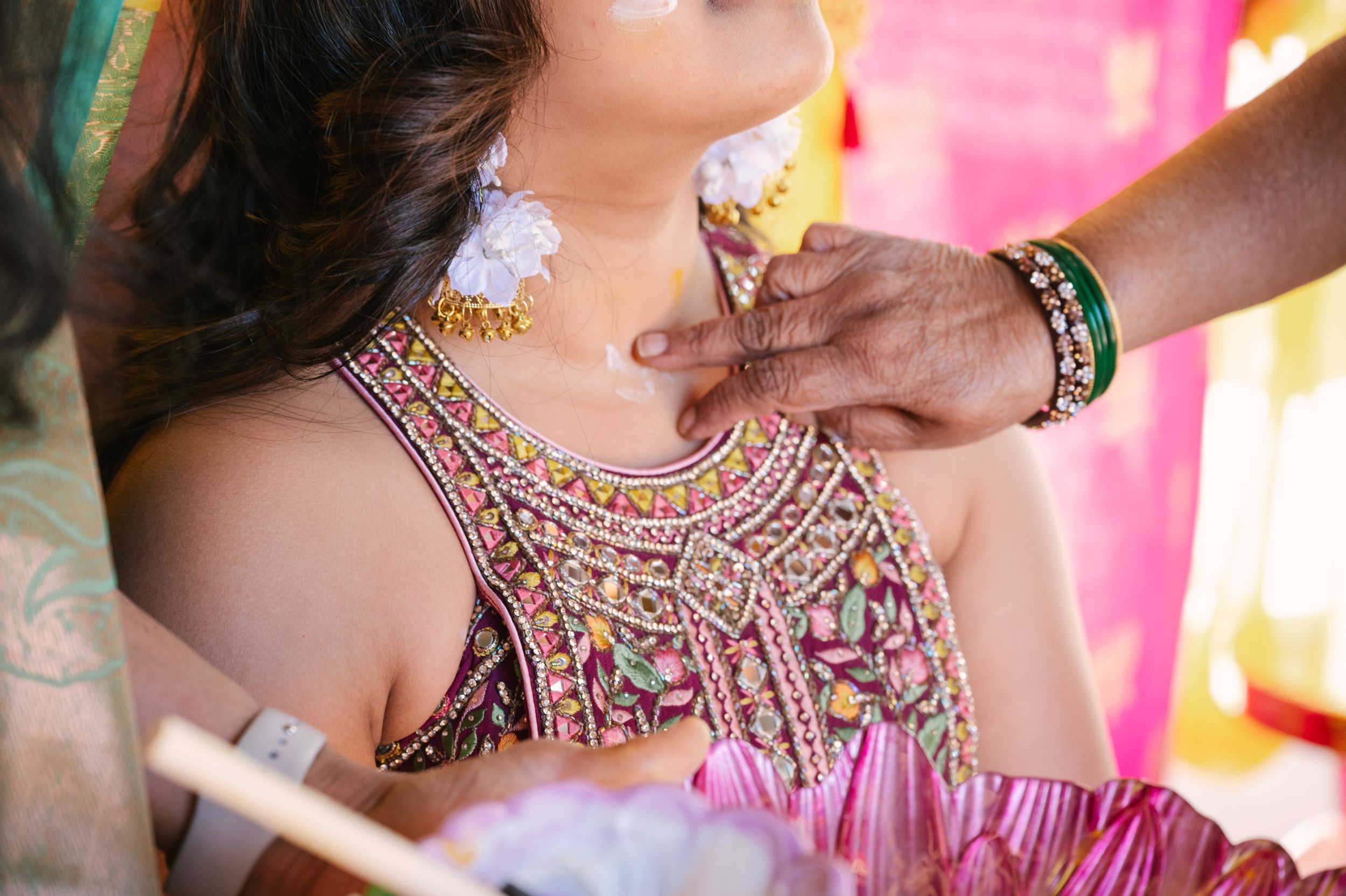
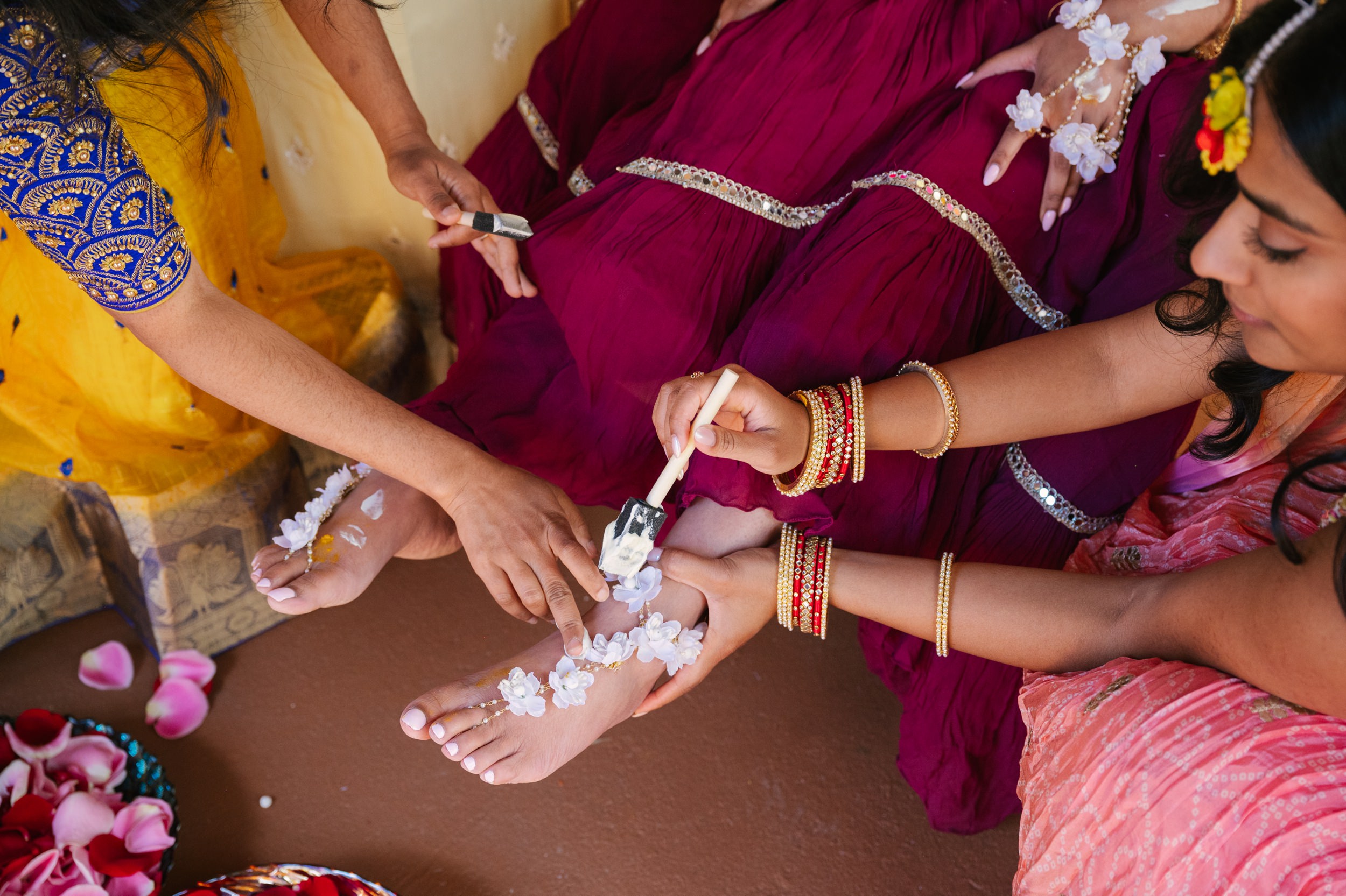
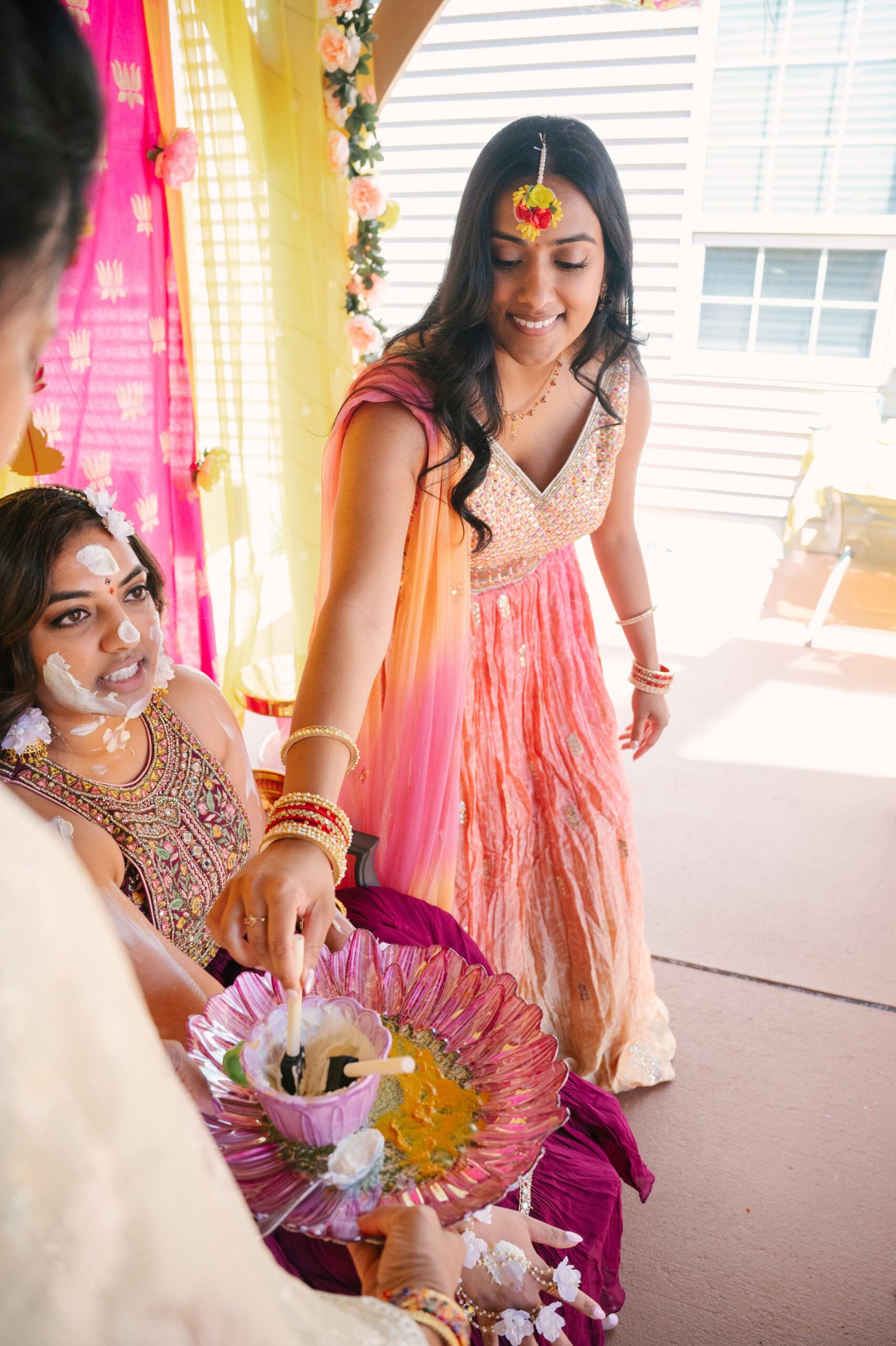
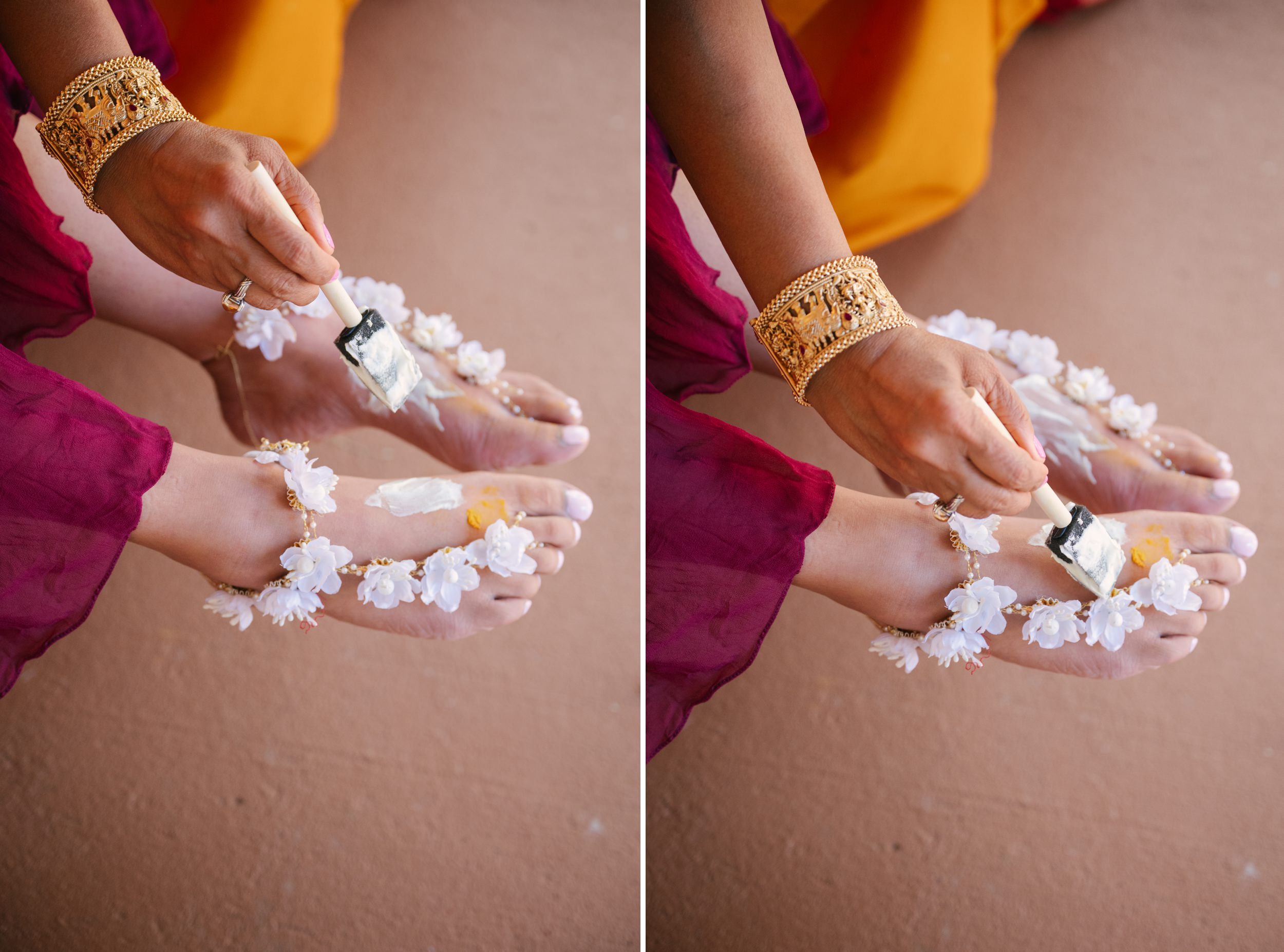
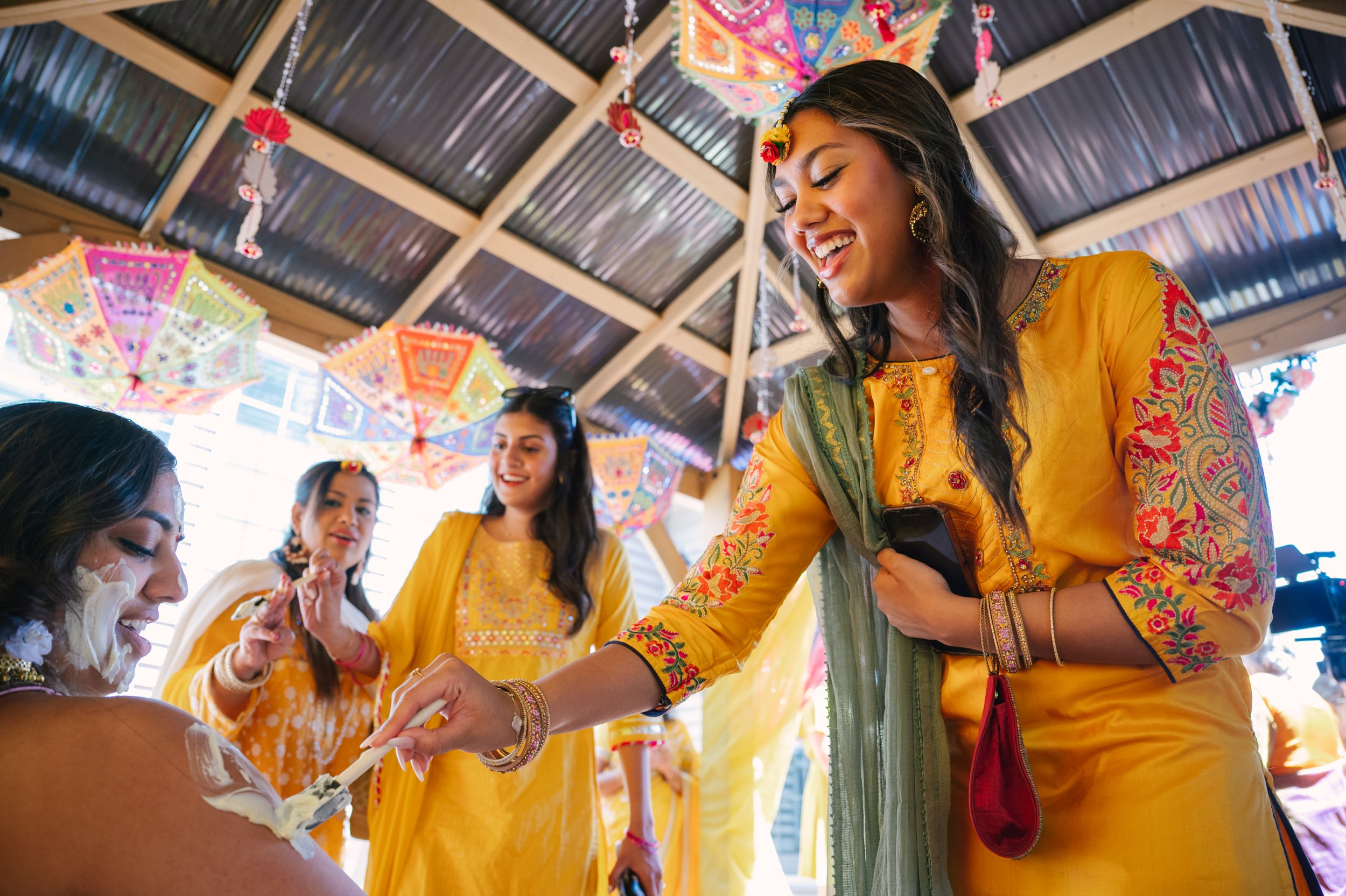
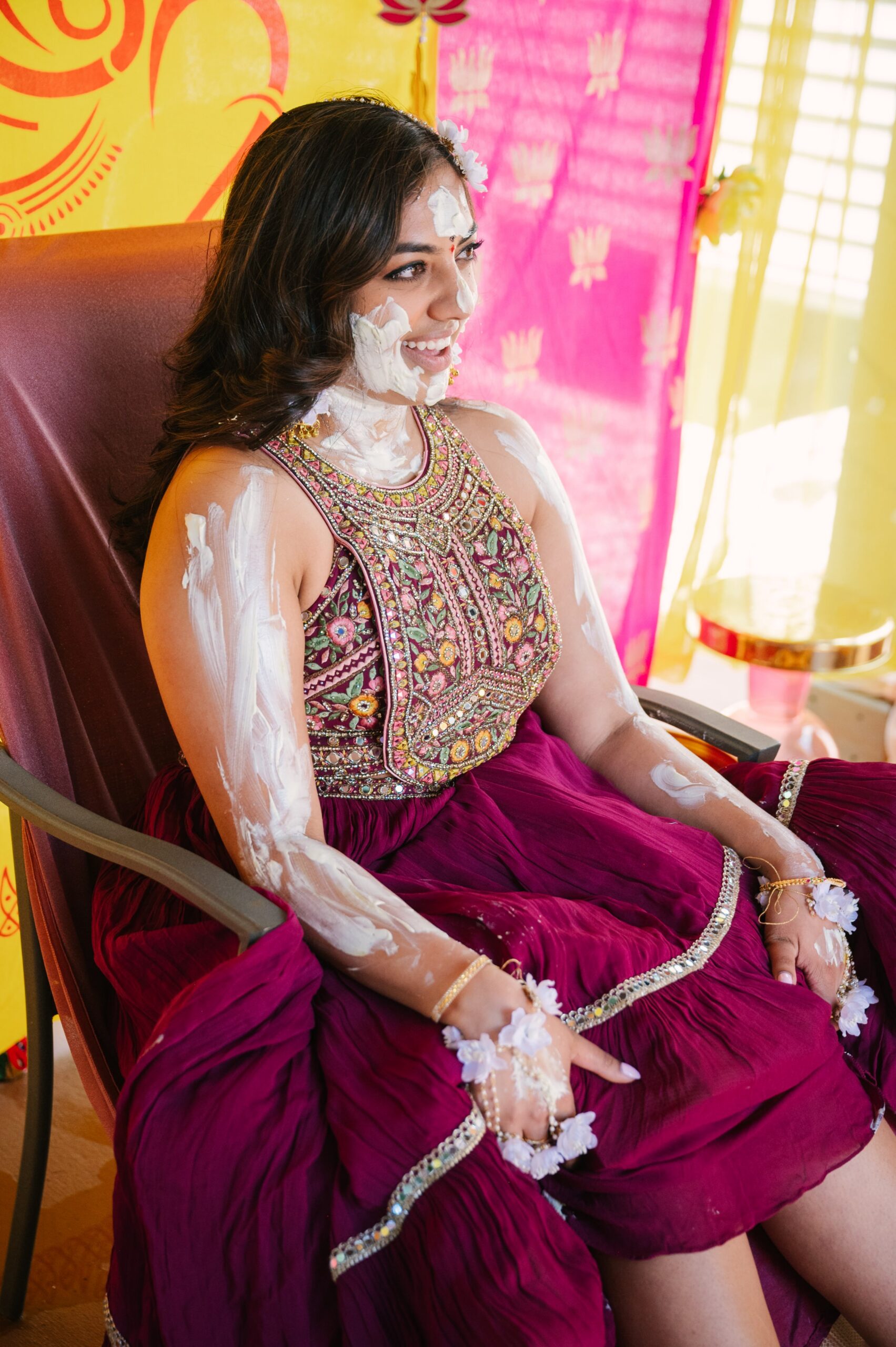
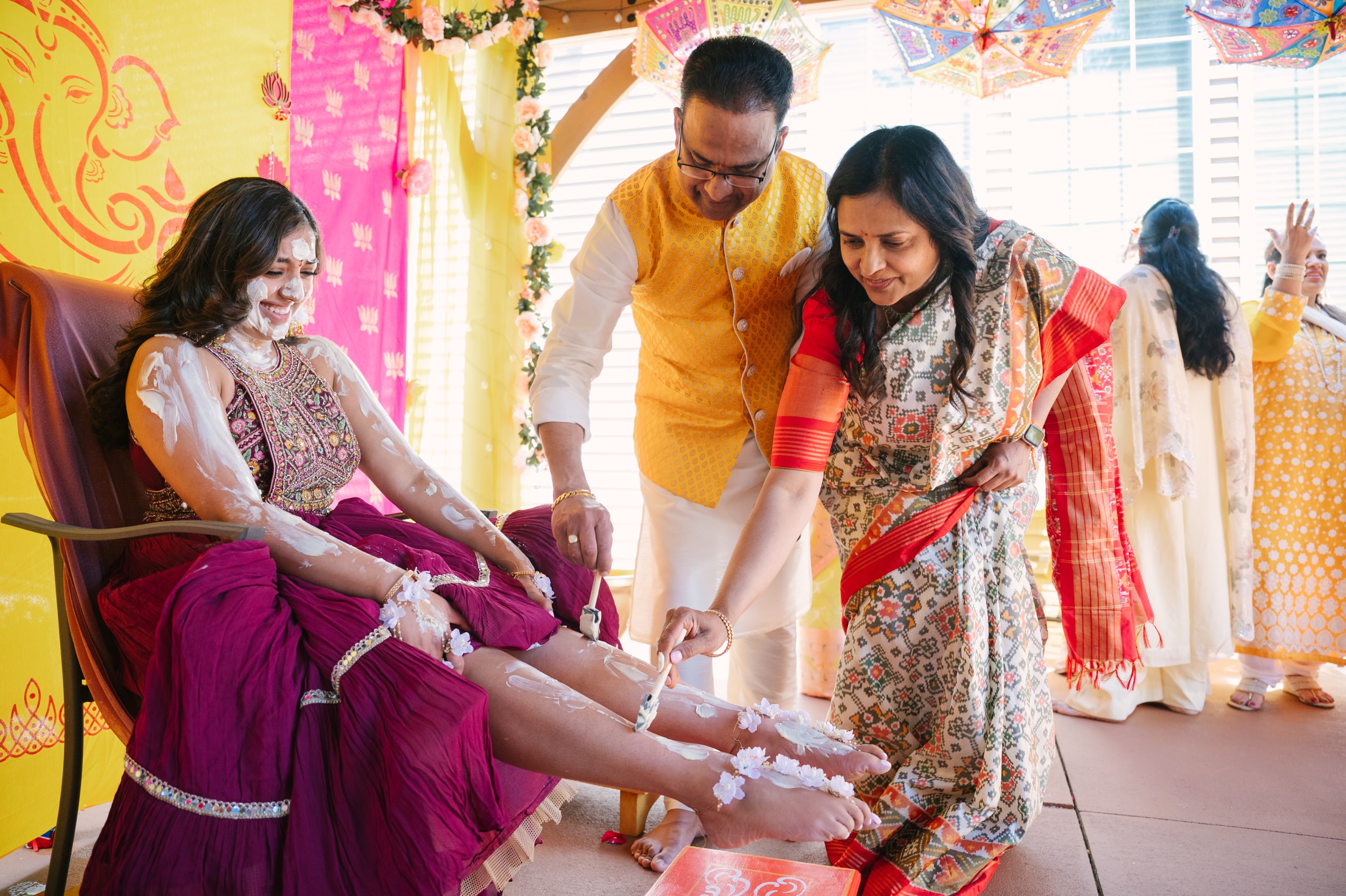
The word Nalugu itself means turmeric. At its center is naluga — a paste of turmeric, gram flour, and fragrant oils, prepared fresh and applied to the bride by the women and men of her family in turn. It’s playful, a little messy, and deeply affectionate: parents, aunts, and grandparents each take a turn smearing the golden paste onto her arms and shoulders. Photographically, this is where the day’s most candid, unguarded expressions live.
Symbolically, Nalugu is a cleansing: it’s believed to wash away anxiety and ill fortune before marriage, purifying the bride physically and spiritually in the same gesture.



Pasupu Kottadam: The Turmeric-Grinding Ritual
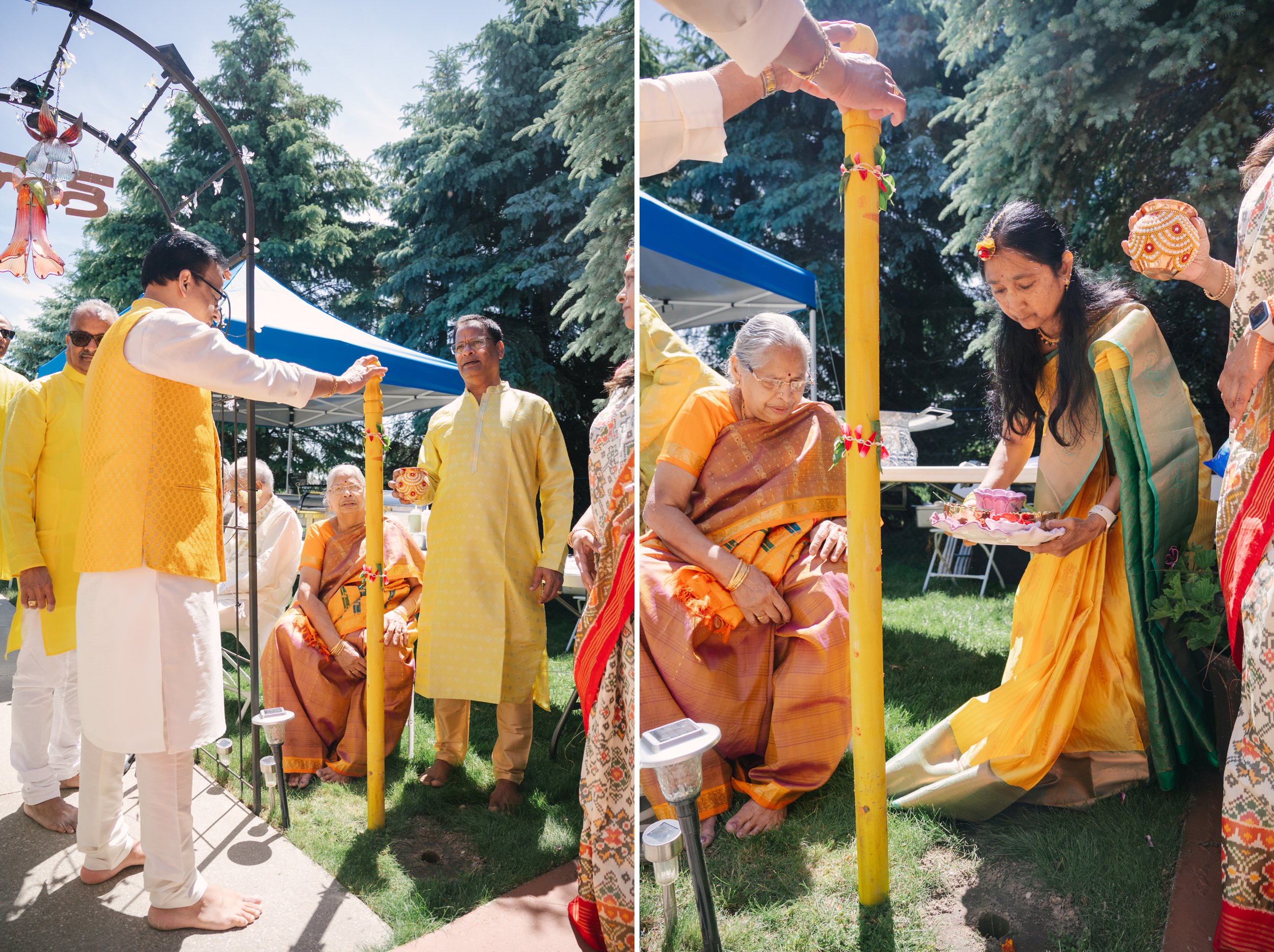
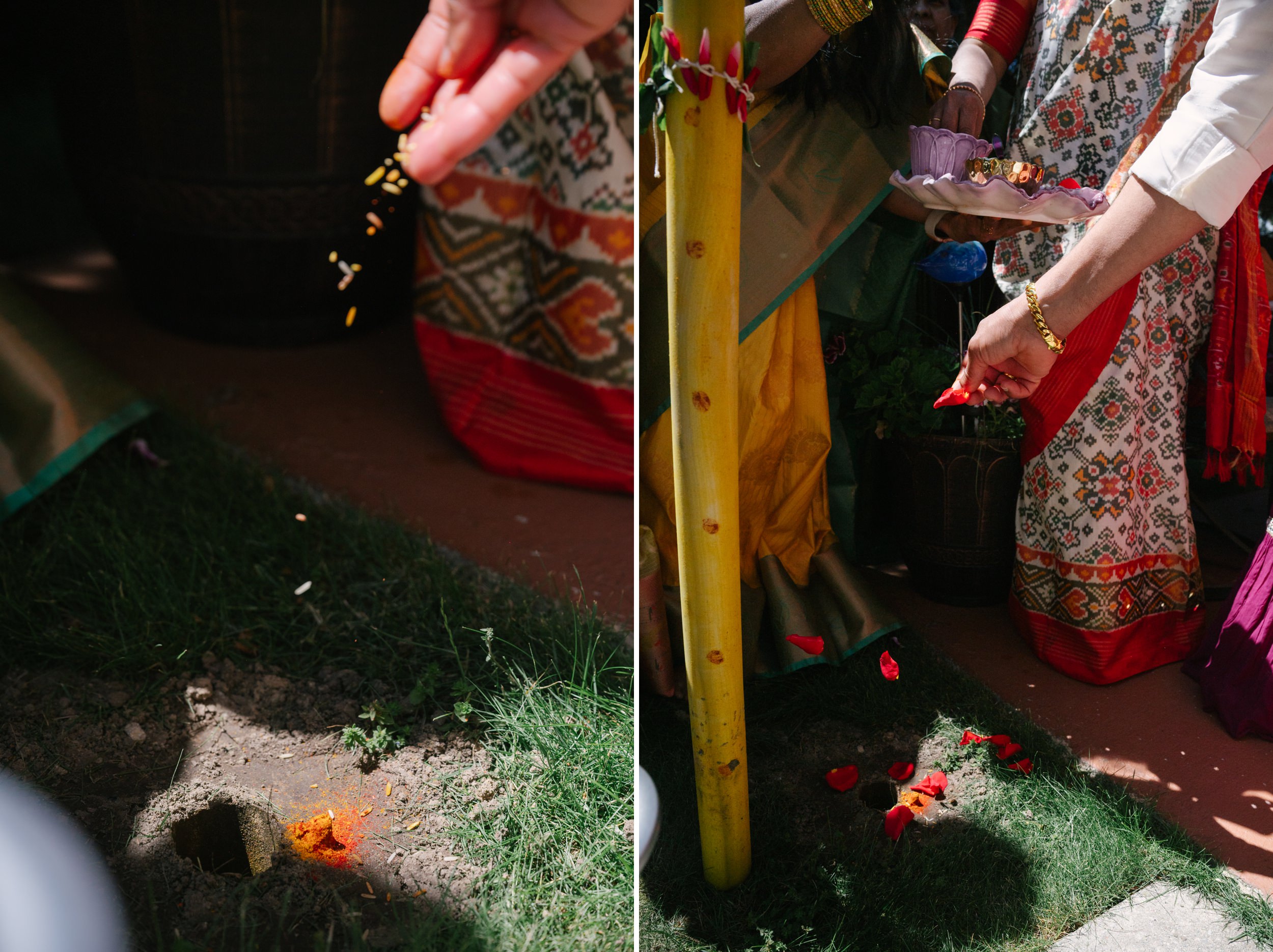
Before the paste ever touches skin, it has to be made — and in many families, that preparation is its own small ceremony. The married women of the family gather around a stone mortar and a long wooden pestle, several hands on the same pole, grinding raw turmeric together while they sing. This is pasupu kottadam, and it’s easy to miss if you don’t know to look for it: it often happens off to the side, under a mandap or gazebo, well before the “main event” of the paste application begins. It’s a communal act on purpose — no single woman prepares the nalugu alone, because the ritual is meant to bind the family together in blessing the bride, not just the bride herself.


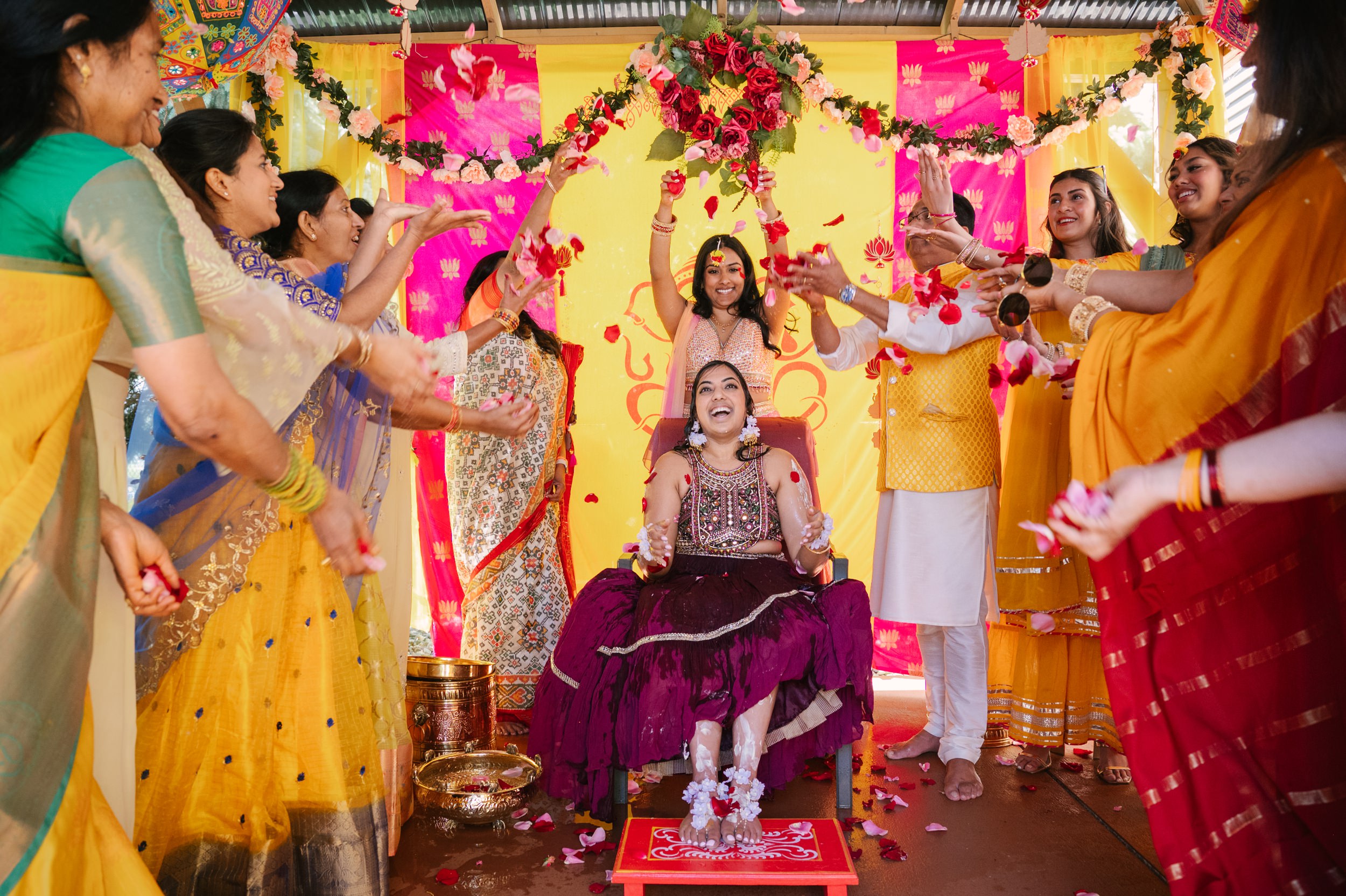
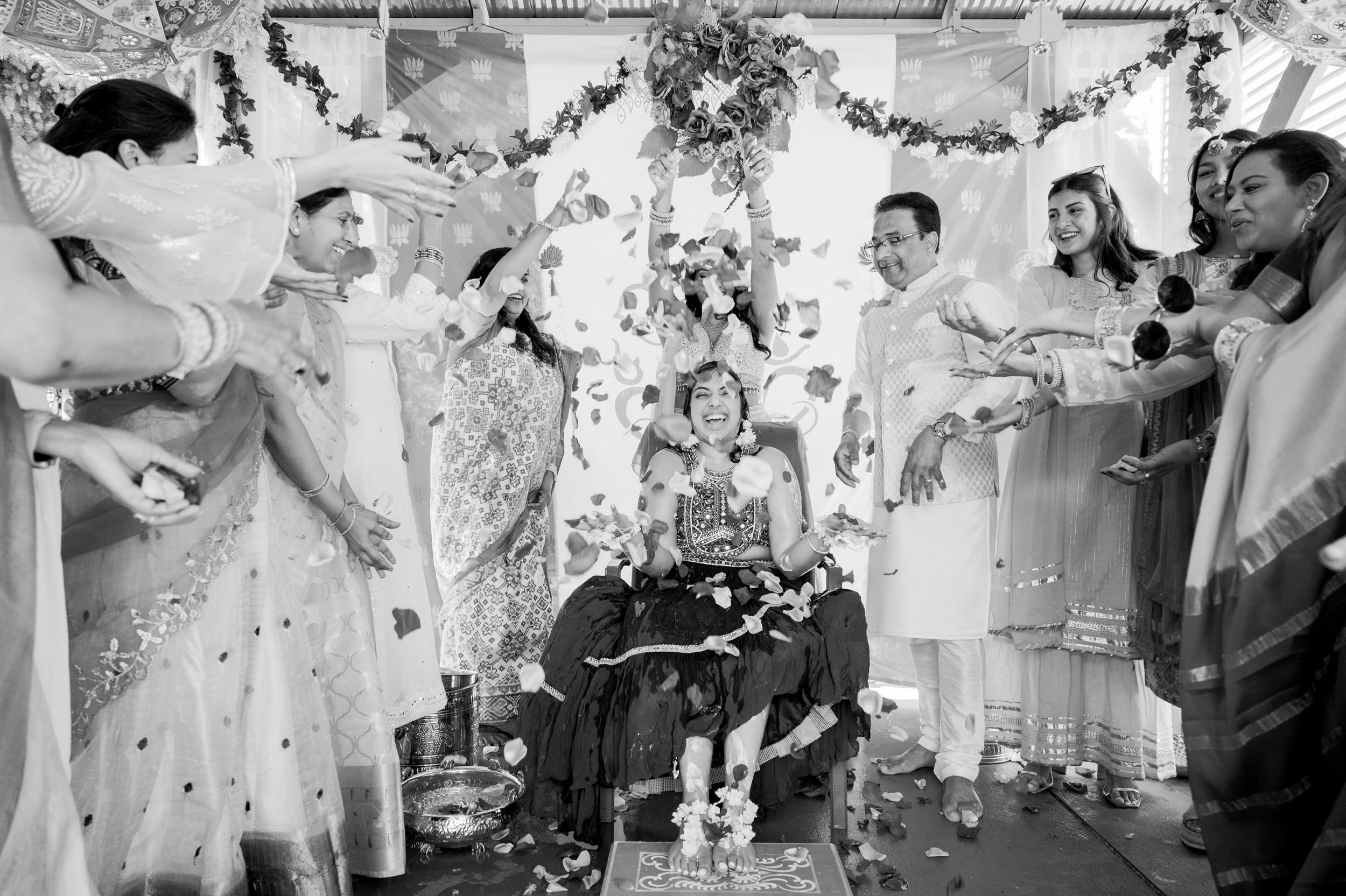
Once the paste is ready, family members, bridesmaids, friends, all the guests come up and apply the paste onto the bride’s body. Things often get really messy, and we absolutely love capturing candid moments here when they do. The natural joy is such a pleasure to witness and document.






Mangala Snanam: The Ceremonial Bath
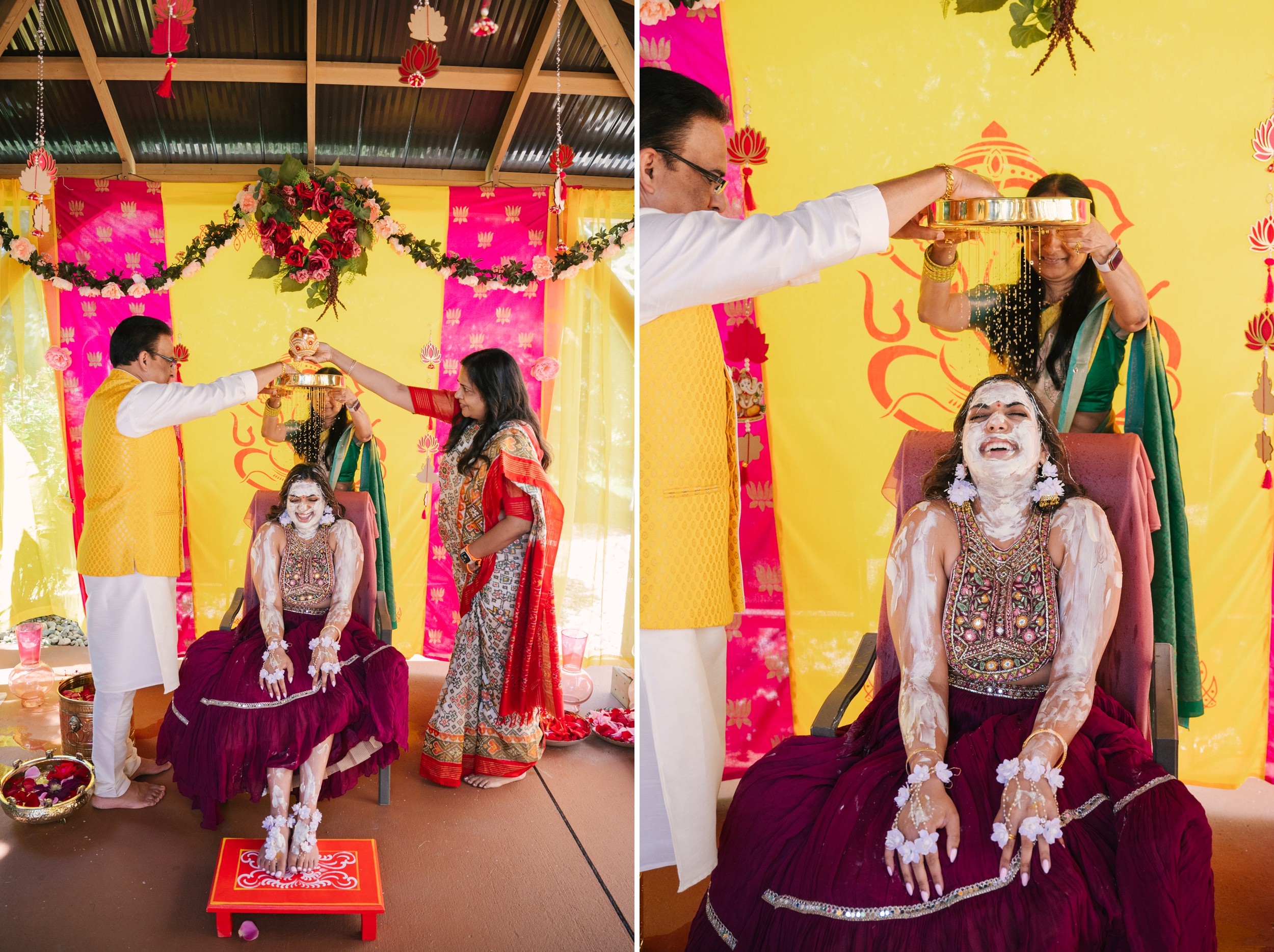
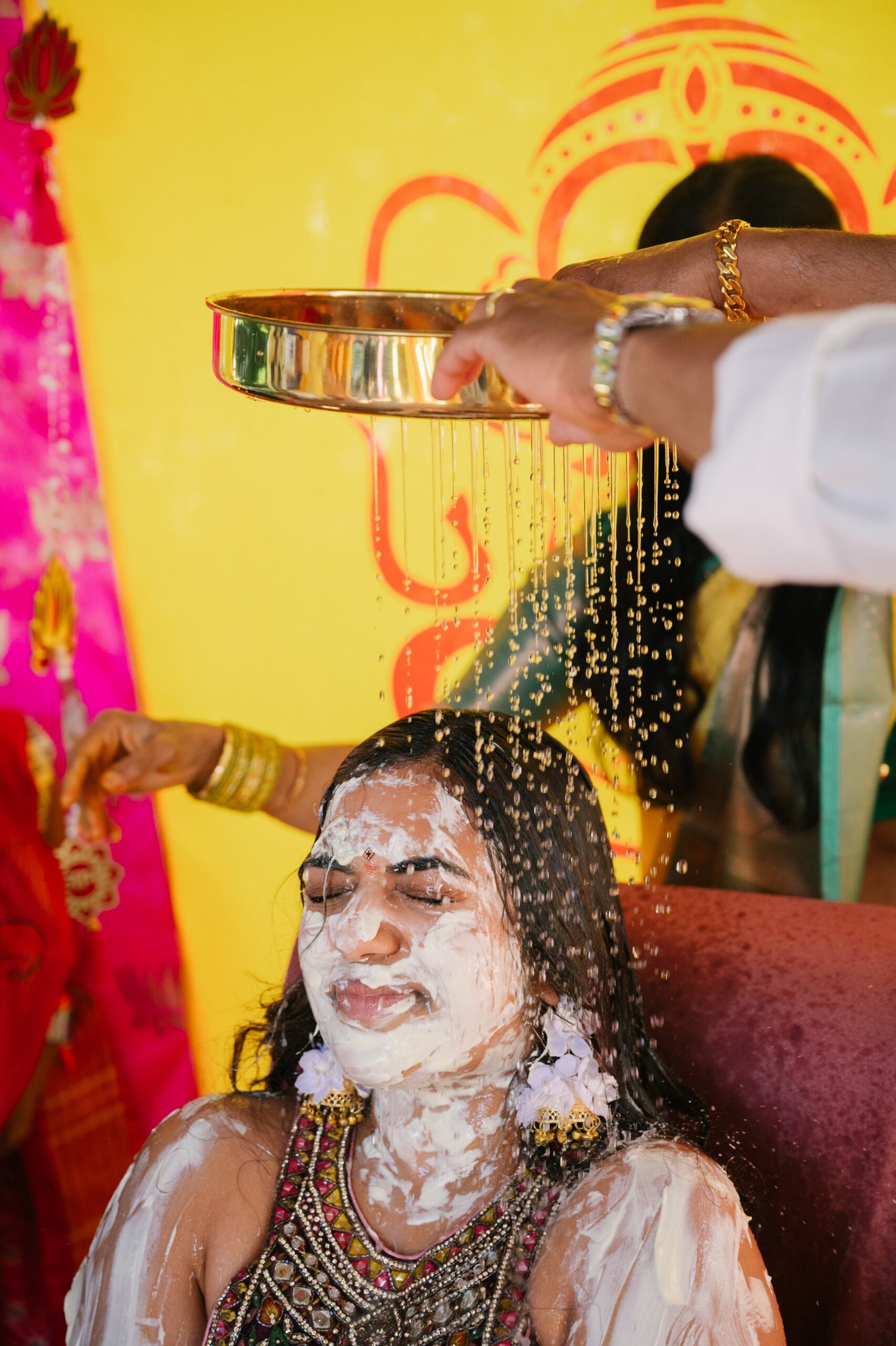
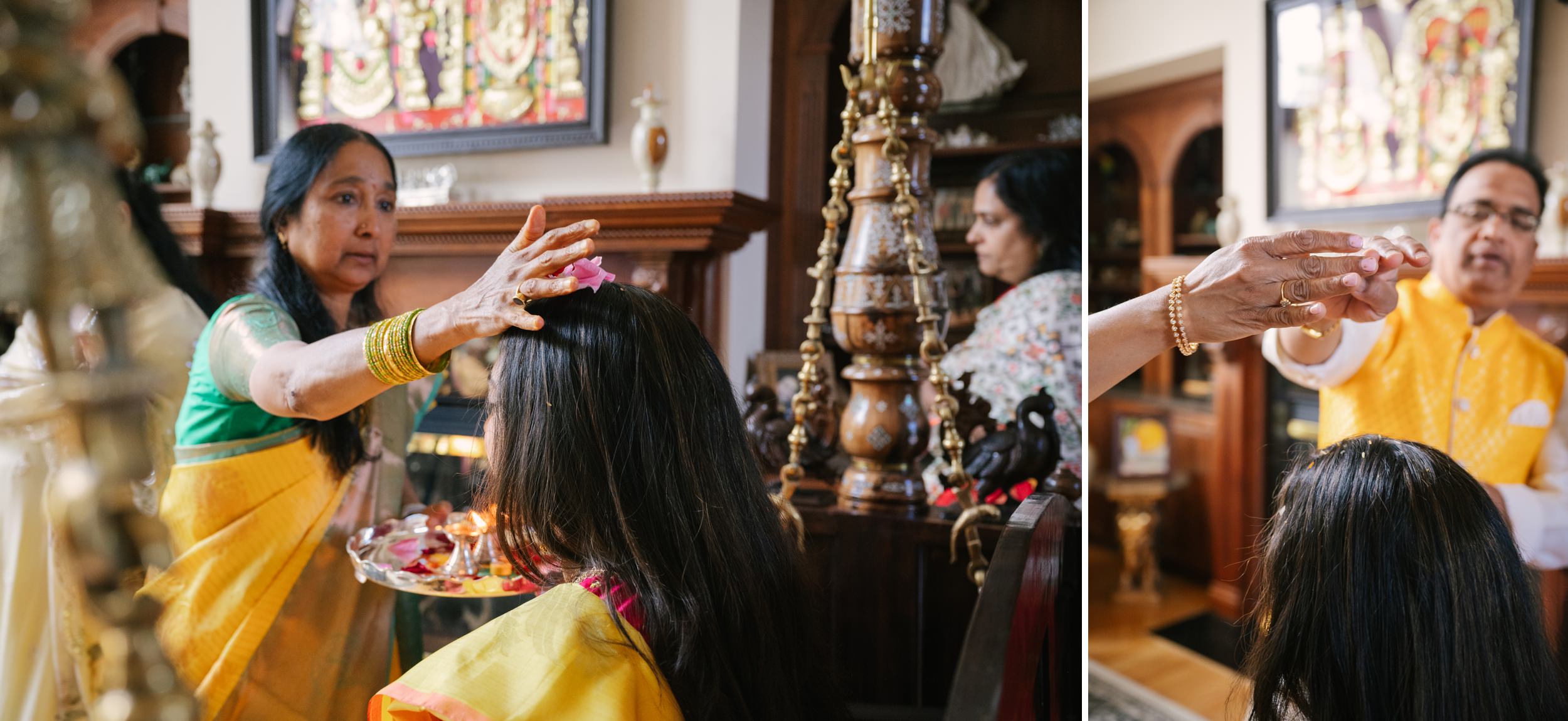
Once the paste has done its work, it’s washed away in the Mangala Snanam — literally, the “holy bath.” A vessel of water is poured over the bride’s head through a sieve, letting it fall gently rather than in a single stream, often mixed with flower petals so the water arrives cool and fragrant. This is the ritual’s turning point: it closes the purification and marks the bride’s transition into her wedding preparations. She emerges from it — often laughing, often glowing — into fresh clothes for the next chapter of the day.



Uyyala: The Swing and the Closing Blessing
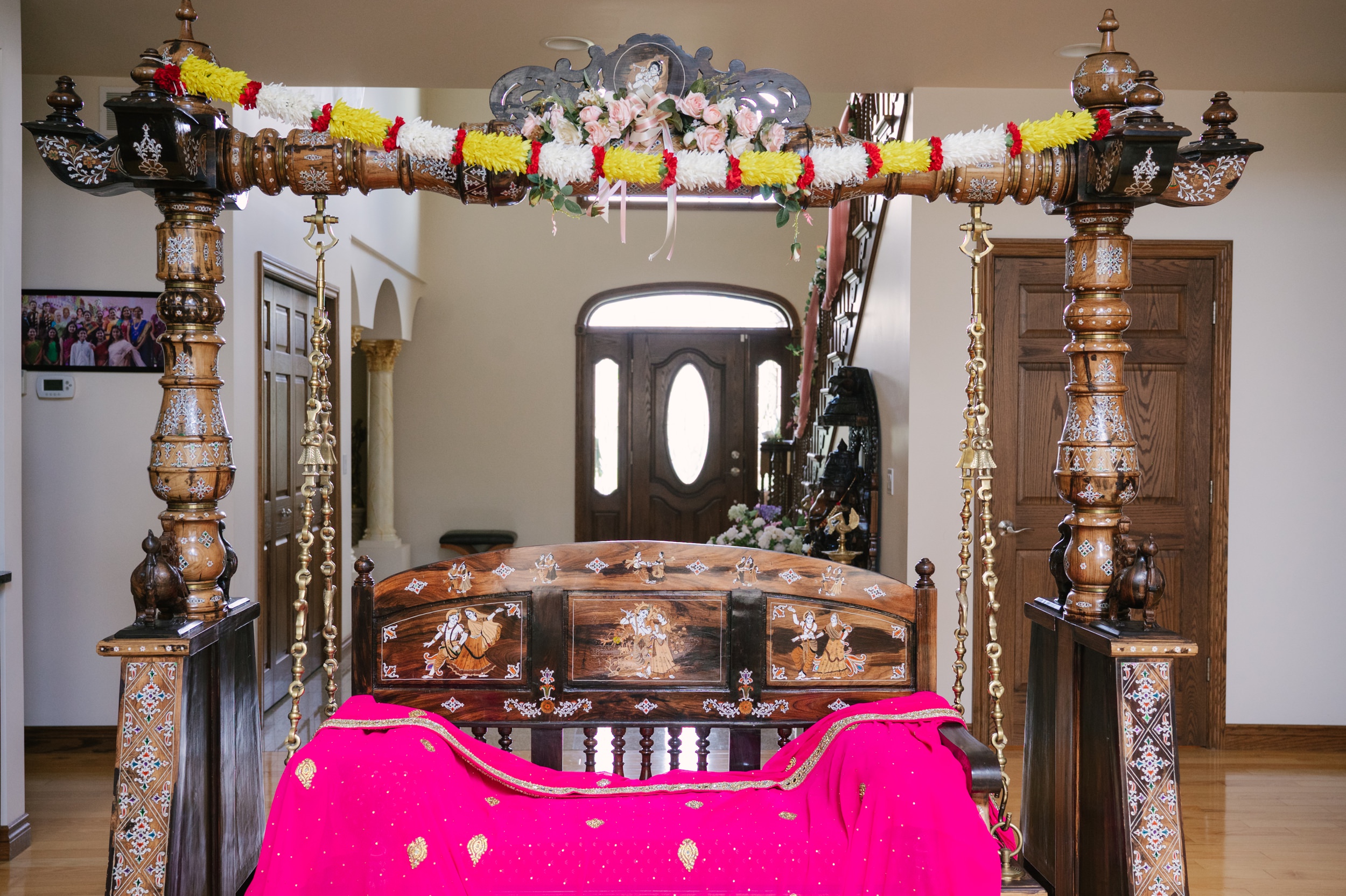
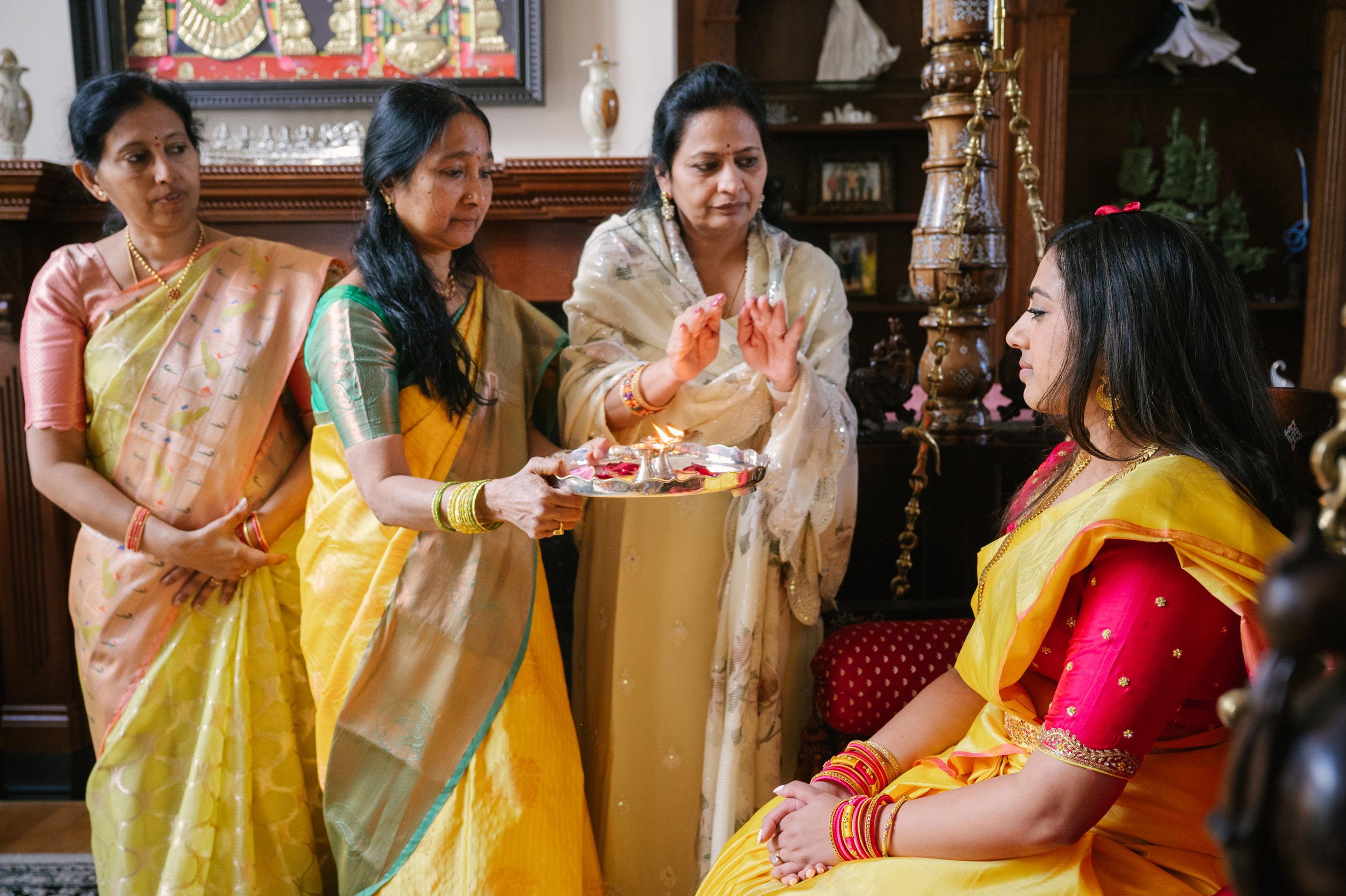
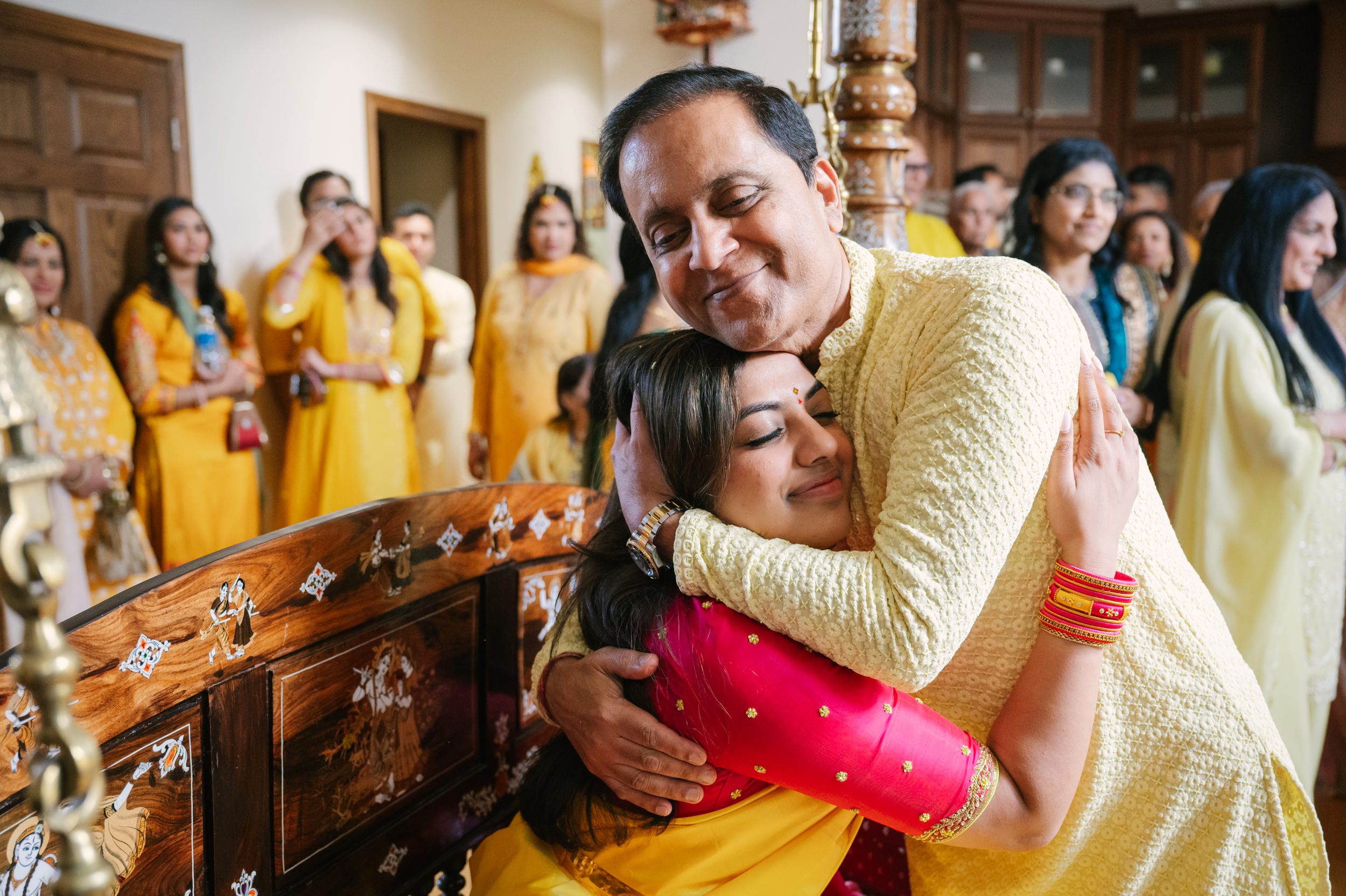
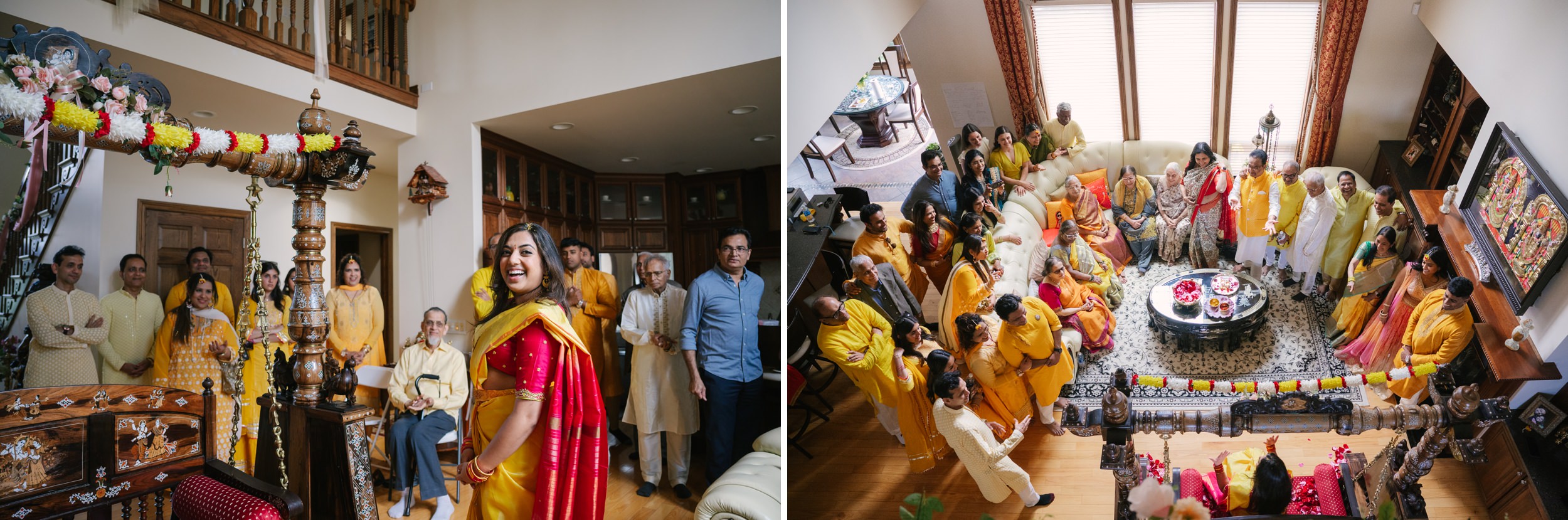
In many Telugu families, the day closes with the bride seated on a wooden swing — known as the uyyala (the same ritual is called oonjal in Tamil and Kannada weddings). Older South Indian households often owned a swing like this outright, a heavy, carved fixture hanging permanently in the main hall, brought into ceremonial use rather than rented for the occasion. The women of the family circle a lit aarti plate in front of the bride as she sits, freshly dressed, catching the last light of the Nalugu day.
The swing itself carries meaning beyond decoration. Its gentle rocking motion is read as a symbol of marriage itself — the steadiness a couple must find together through life’s ups and downs — and its presence at the close of Nalugu marks a quiet passage: the bride is no longer simply a daughter being prepared, but a woman about to become someone’s wife.





Why This Ceremony Deserves Its Own Focus & Intentional Planning
Nalugu unfolds in layers, in different rooms, at different tempos — the boisterous energy of the paste application, the intimacy of the grinding ritual, the joyfulness of the bath, the reverence of the swing. For Telugu families hosting in Michigan (or anywhere in the U.S., Canada and beyond), your photographer (and planner) being familiar with the cultural fluency is the difference between a ‘nice to have’ event and an intentional one that leaves a real record of the day’s meaning.
How long are such events, and how much time should you allocate on a certain day before your wedding? Typically, photography for such events is between 2 and 3 hours, and they usually take place in the morning or early afternoon.
We hope this short guide, so beautifully illustrated thanks to Siri and her wonderful family’s event, is helpful to future brides planning their own Indian pre-wedding events at home.
Siri & Swaroop got married at The Henry hotel in Dearborn, Michigan, in a gorgeous, airy Telugu Indian wedding ceremony. We can’t wait to share more from their events.
Browse other Telugu Indian weddings we’ve photographed here.